| Key Takeaways: 1. Enterprise blockchain in 2026 is used mainly for automation and trust, not crypto trading: smart contracts, digital identity, supply chain tracking, and tokenised assets. 2. Permissioned platforms (Hyperledger Fabric, Corda, Ethereum-based Besu, Polygon) each fit different needs; there’s no single “best” chain, only the best fit for your use case. 3. Self-sovereign digital identity, built on W3C Verifiable Credentials, is becoming law in the EU through eIDAS 2.0, with wallets due across all member states by December 2026. 4. GDPR and blockchain immutability can coexist through off-chain storage: personal data lives off-chain, only a hash sits on the ledger, and deleting the off-chain data satisfies the right to erasure. 5. Most blockchain pilots stall not because of the technology, but because of operational complexity and weak integration planning. A defined roadmap materially improves survival rates. |
What Is Blockchain, Really?
Keep aside the price charts, and blockchain is a simple idea: a shared record that multiple organizations can trust without needing to trust each other directly.
Three properties make that possible.
- Decentralization. No single party owns or controls the record. Multiple participants each hold a copy, so no one can quietly alter history.
- Immutability. Once a transaction is recorded and confirmed, changing it would require rewriting every subsequent block across every copy of the ledger, which is deliberately made impractical.
- Consensus. Participants agree on what counts as valid through a defined process, rather than a central authority simply declaring it so.
Cryptocurrency was the first popular application of this idea, but it’s just one use case. The same three properties are equally useful for a group of banks that need to agree on a settlement record, or for a group of suppliers that need to agree on where a shipment currently sits.
What are Smart Contracts?
A smart contract is business logic written in code instead of legal terms. It follows simple if/then rules: if a defined condition is met, then a defined action happens automatically, with no one manually approving each step.
This isn’t limited to DeFi (Decentralized Finance). Enterprise triggers already in production include:
- If a sensor or scan confirms a shipment’s delivery, then payment is released to the vendor automatically.
- If a set of trade finance documents is verified across all counterparties, then a letter of credit is approved within a week of manual bank-to-bank checks.
- If an insurance policy’s parametric condition is met (a verified flight delay, a rainfall threshold), then a claim pays out automatically.
- If a compliance check passes, then access or funds are released to the next stage of a workflow.
The value isn’t the automation alone. It’s that the rules are transparent to every party and cannot be quietly changed by one side after the fact.
Smart Contract Platforms: A Quick Comparison
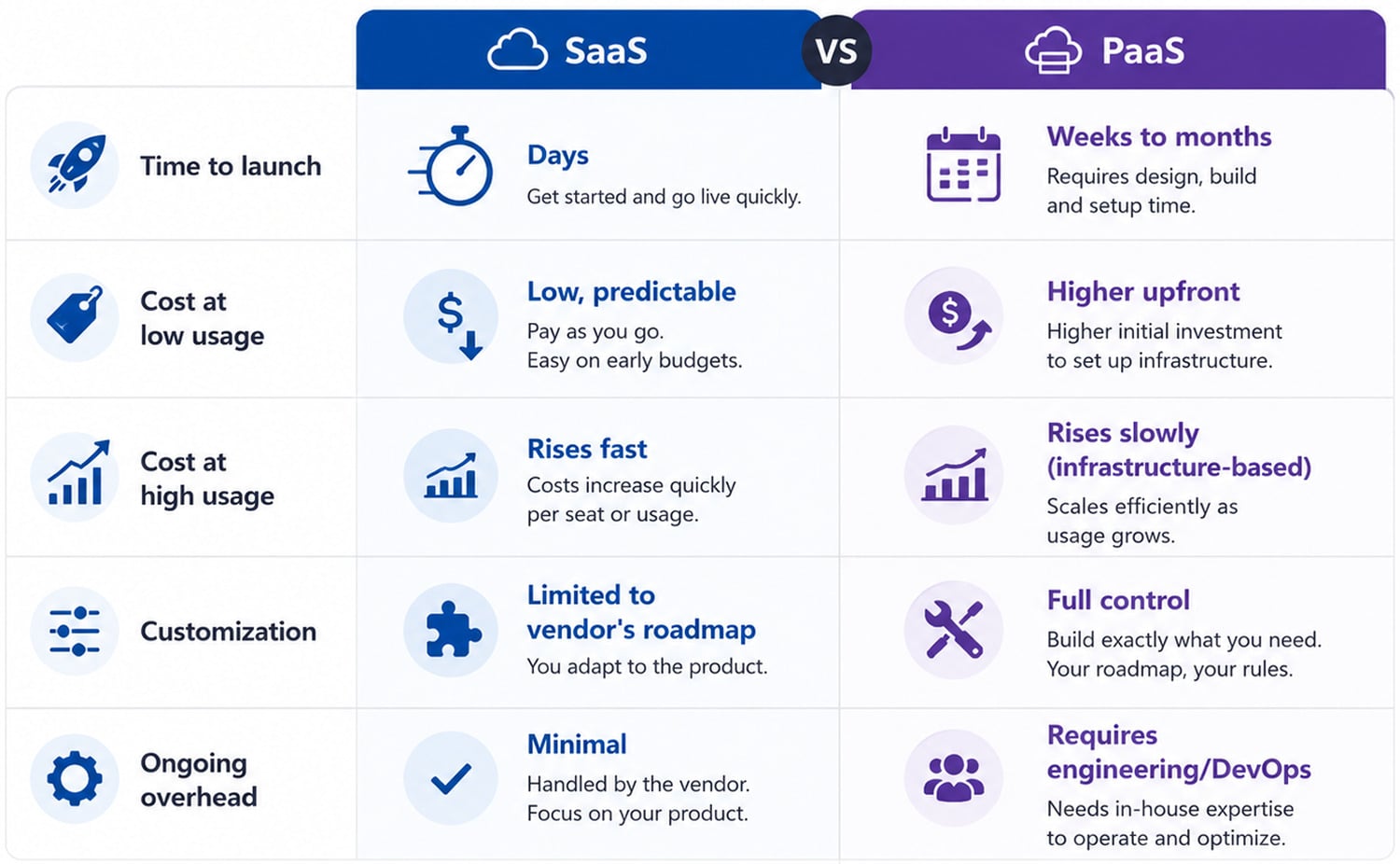
[Create an infographic-style image for the table]
Choosing a smart contract platform is an architecture decision, not a preference. Here’s how the four most common enterprise options stack up:
| Platform | Authorization | Throughput | Best Use Case Fit |
| Hyperledger Fabric | Fully permissioned, channel-based privacy lets you segment which participants see which data | 3,500+ TPS under Raft consensus among the fastest permissioned options | Regulated, multi-party workflows needing strict data segregation: healthcare consortiums, government networks, supply chain |
| R3 Corda | Permissioned; data shared only on a need-to-know basis between transacting counterparties, not broadcast network-wide | Optimized for bilateral finality over raw throughput; proven at scale in production financial infrastructure | Financial services: capital markets, collateral management, securities settlement |
| Ethereum Enterprise (Besu) | Flexible, can run fully permissioned or connect to the public Ethereum mainnet | Public mainnet runs roughly 15–30 TPS at the base layer; Layer-2 rollups push this significantly higher | Tokenization and digital assets where EVM compatibility and Solidity tooling matter, or future public-chain interoperability is a goal |
| Polygon | Public and EVM-compatible, built for high throughput at low cost | Thousands of TPS with fractions-of-a-cent transaction fees | Public-facing tokenized assets, loyalty and consumer programs, cases where public verifiability is a feature, not a risk |
PS:
- Fabric and Corda dominate regulated, closed-consortium enterprise deployments.
- Besu and Polygon matter most when you want compatibility with the broader Ethereum ecosystem or a public-facing component.
Digital Identity on the Blockchain
Traditional identity systems are centralized: one company or government holds your data in one database, and you re-prove who you are every time a new system needs to check. That creates a single point of failure and constant repetitive verification.
Self-sovereign identity flips this. Instead of a central database, individuals or organizations hold their own verified credentials and share only what’s needed, when it’s needed. The technical backbone for this is the W3C Decentralized Identifiers (DID) and Verifiable Credentials (VC) standards, which let a credential (a license, a diploma, a KYC check) be cryptographically signed by its issuer and instantly verified by anyone, without contacting the issuer again.
It isn’t theoretical. The EU’s eIDAS 2.0 regulation requires all 27 member states to offer a European Digital Identity (EUDI) Wallet to citizens and businesses by December 2026, built on W3C Verifiable Credentials and selective disclosure. That means a user can prove they’re over 18 or hold a valid professional license, without revealing their full date of birth or address. Regulated industries, banking, healthcare, and telecoms must accept these wallets as an authentication method roughly a year later.
For enterprises, the practical benefit is straightforward: faster onboarding, fewer repeated identity checks across partner systems, and a smaller blast radius if any single system is compromised, since there’s no central honeypot of everyone’s data.
Enterprise Use Cases
1. Trade finance. Platforms like WaveBL, CargoX, and Komgo have moved global trade documentation, bills of lading, and letters of credit from paper processes taking one to two weeks onto shared ledgers with smart contract automation, cutting both fraud and delay.
2. Institutional finance. JPMorgan’s blockchain platform (now operating as Kinexys, formerly Onyx) settles billions of dollars in transactions for institutional clients. DTCC’s Project Ion, built on Corda, now handles well over 100,000 equity transactions daily in parallel production, demonstrating that bilateral privacy and notarized consensus can operate at real market scale.
3. Tokenized real-world assets. BlackRock’s tokenized fund BUIDL represents institutional money market exposure on-chain. Platforms like Propy and RealT are tokenizing property and rental income, letting investors buy fractional shares with automated, smart-contract-based distribution.
4. Supply chain. De Beers’ Tracr platform tracks diamonds from mine to consumer, giving an end-to-end, tamper-evident record that supports conflict-free sourcing claims, a model now being echoed across pharmaceuticals (serialization tracking) and food (origin verification).
5. Healthcare and cross-border credentialing. The EU’s eIDAS 2.0 framework explicitly lists cross-border health data access as a target use case for verifiable credentials, letting a patient’s verified medical credentials or prescriptions travel securely between member states without a shared central database.
The Regulatory and Compliance Reality
The most cited tension in enterprise blockchain is GDPR’s Article 17 “right to erasure” against blockchain’s core promise of immutability. You can’t delete a block without breaking the chain it belongs to. Regulators have been clear that “the data is technically impossible to delete” is not an acceptable excuse for non-compliance.
The practical fix that’s become standard architecture: never put personal data directly on-chain. Store it off-chain, and put only a cryptographic hash or an encrypted reference on the ledger.
When someone exercises their right to erasure, you delete the off-chain data (or destroy the encryption key). The on-chain hash remains technically immutable, but it’s now meaningless and unlinkable to any individual, which satisfies the regulation’s intent without breaking the chain.
Beyond GDPR, enterprises also need to navigate:
- KYC/AML reuse. Verifiable credentials let a customer who has already completed identity verification with one institution reuse that proof elsewhere, instead of repeating the full process, a model eIDAS 2.0 formalizes for the whole EU.
- A jurisdictional patchwork. The EU’s MiCA framework, evolving U.S. digital asset guidance, and a mix of national stablecoin rules mean a global deployment has to be designed for multiple, sometimes inconsistent, regulatory regimes from day one.
Cost, ROI, and Risk: What Enterprises Actually Weigh
Budget expectations vary widely by scope:
- Targeted, single-use-case deployments: roughly $300,000 to $1 million.
- Enterprise-wide systems with deep integration, governance, and compliance work: often north of $1 million.
- Typical payback period: 12 to 18 months, mostly from reduced reconciliation work, fewer audit cycles, and faster partner onboarding.
The risk side deserves equal attention. Widely cited industry research puts the enterprise blockchain pilot failure rate at roughly 87%, with only a minority of projects reaching production. Importantly, the leading cause isn’t the technology itself.
One industry survey found that 62% of abandoned projects pointed to operational complexity: certificate management, multi-organization governance, and infrastructure scaling, not protocol limitations or smart contract bugs.
Analysts also note infrastructure and operations can account for 40–60% of total project cost, yet most teams budget under 15% for it.
The takeaway: the technology risk in 2026 is low. The execution risk, integration, governance, and realistic operational budgeting are where projects actually die.
A 5-Stage Implementation Roadmap
- Assess. Define one specific operational problem. Confirm that blockchain genuinely beats a standard database or API in this case, where shared multi-party trust is the deciding factor, not novelty.
- Pilot. Run a proof of concept with clear entry and exit criteria. Choose your platform (see the comparison table above) based on documented privacy, throughput, and governance needs, not familiarity or hype.
- Integrate. Connect the network to ERP, CRM, identity, and compliance systems. This is the single biggest failure point for enterprise pilots, so plan and budget for it explicitly rather than treating it as an afterthought.
- Scale. Move from a single-node proof of concept to a production-grade, multi-organization network with proper key management, monitoring, disaster recovery, and role-based access control included from day one.
- Govern. Set clear rules before wide rollout: who operates nodes, how upgrades are approved, how disputes are resolved, and how compliance is audited on an ongoing basis.
Where Blockchain Meets AI
The newest frontier in enterprise blockchain isn’t crypto-adjacent at all; it’s AI infrastructure. Three patterns are emerging in 2026:
- Verifiable AI agent identity. As AI agents start holding wallets and executing multi-step actions autonomously, enterprises need a way to authenticate which agent did what. Cryptographic, wallet-based identity is proving more robust than traditional credential stores for this.
- On-chain provenance. When an AI system makes a decision that matters, approving a payment, flagging a transaction, recording that decision and its inputs on-chain creates an auditable trail of why the system acted, which matters enormously for governance and dispute resolution.
- AI-powered oracles. Since blockchains can’t natively pull in outside information, oracles feed external data on-chain. AI is increasingly used to aggregate, cross-check, and flag anomalies in that data before it reaches a smart contract already in production for use cases like parametric insurance, where a verified real-world event triggers an automatic payout.
None of this requires a token or a coin. It’s blockchain used the way it’s best suited: as a trust and verification layer underneath systems that need one.
Frequently Asked Questions
1. Is blockchain still relevant without cryptocurrency?
Yes. Most enterprise blockchain deployments in 2026 have nothing to do with trading crypto. They use permissioned ledgers for smart contracts, digital identity, supply chain tracking, and tokenized assets infrastructure use cases, not speculation.
2. What’s the difference between a smart contract and a traditional contract?
A traditional contract states obligations in legal language and relies on people to enforce them manually. A smart contract encodes the same rules in software: when predefined conditions are met, the contract executes automatically, without anyone approving each step.
3. Can blockchain identity systems comply with GDPR?
Yes, with the right architecture. Personal data is kept off-chain, while the blockchain stores only a cryptographic hash or reference. When someone exercises their right to erasure, the off-chain data (or its encryption key) is deleted, making the on-chain record unreadable and effectively anonymous.
4. How much does enterprise blockchain implementation cost?
Targeted, single-use-case deployments typically run from roughly $300,000 to $1 million. Enterprise-wide systems with deep integration, governance, and compliance requirements often exceed $1 million. Most organizations see measurable ROI within 12 to 18 months.
5. What’s the difference between public, private, and consortium blockchains?
Public blockchains are open to anyone and fully transparent. Private blockchains restrict participation to a single organization. Consortium blockchains sit in between: a defined group of organizations jointly governs and validates the network, which is why most enterprise deployments use this model.
| Evaluating a specific blockchain use case for your organization? Helius Work designs and builds smart contract systems and digital identity infrastructure for enterprises. Talk to our team about your requirements. |